For nearly six decades, Singapore’s semiconductor industry has powered technologies that connect, protect and transform lives around the world.
As we approach our 60th anniversary in 2028, we invite you to discover the People of Semiconductor, the Innovations that have advanced our industry, and the Imagination of our next generation that will take us forward.
4501
Days To Go
0/60
Innovation
0/60
People of
Semiconductors
0/60
Imagination
0
Chip Chat
Explore the Innovations That Shape Our World
Explore how semiconductor innovations are transforming the way we live, work and connect,
and powering what comes next.
Connect the World
Power AI
Enable Mobility
Improve Healthcare
Build Smarter Factories
Protect Our Planet
Strengthen Supply Chains
Transform Everyday Life
Power What’s Next
Meet the People of Semiconductors
Every breakthrough begins with our people.
Pioneers. Generations of families. Hidden Roles. Singaporeans Abroad. Future Makers. Movers and Shakers. Each and every story reveals the passion, resilience and ingenuity behind Singapore’s semiconductor success.
From Bearings to Breakthroughs
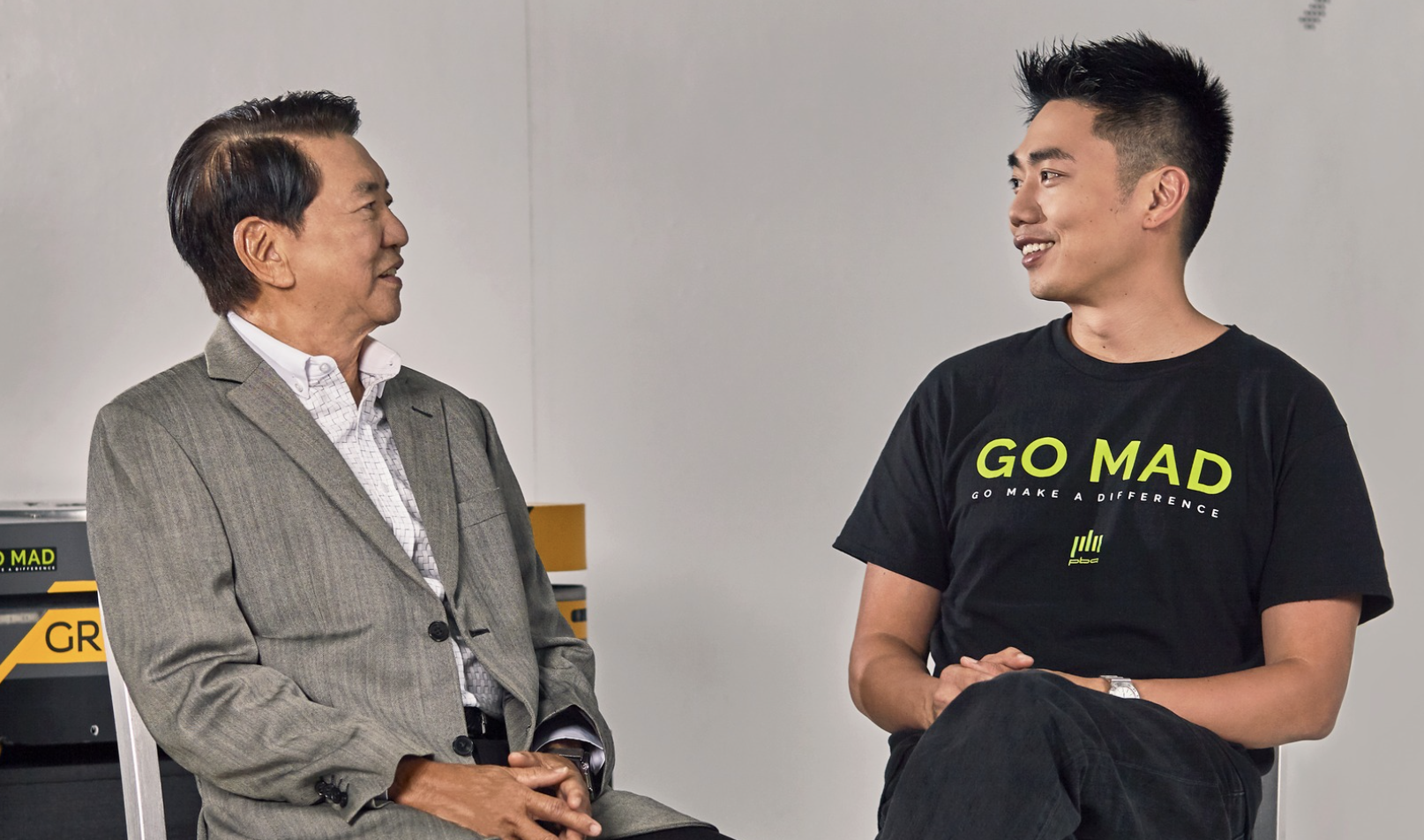
How One Family’s Vision Helped Shape the Future of Precision Engineering
Every enduring business has a story.
Some begin with a breakthrough idea. Others with bold ambition.
For Precision Bearings and Accessories (PBA), it began with something much simpler, a father’s determination to build a better future for his family.
For B H S, that journey started in 1975, when its founder saw an opportunity and believed it was better to build something of his own than work for others. Singapore was still a developing nation, industries were evolving rapidly and there was no clear roadmap for entrepreneurs. Every decision carried uncertainty and every opportunity came with risk.
Watch industry leaders make the call, and unpack the decisions, disruptions and opportunities shaping the future of semiconductors.
Imagine What’s Next
What would you make possible with a chip?
Discover how our next generation imagines a smarter, better and more connected world through “I want to chippify…”
Pets
By Nathan Lai, Primary 5
Kitchen
By Erika Chen, NTU
Personal Learning Devices
I would chipify learning devices. Advanced semiconductor chips could enable personalised learning that adapts to each student’s pace, identifies learning gaps and delivers tailored content, making education more engaging and effective.
By Lai Linlang, NUS
Intelligent Safety Companion
I would chipify an intelligent safety companion. Small, low-power wearables powered by AI-enabled semiconductors could detect falls, unusual movements and distress signals in real time, enabling faster alerts, greater privacy and proactive personal safety.
By Oviya Chandru, NUS
Chairs
I want to chipify chairs, to automate them such that they can be automatically moved in certain preferred configuration in events, banquet etc, without wasting time and manpower resources to move each chair. And for some chair, we can also remotely activate massages with user ergonomics.
By Shen Yuchen, NUS
Timeline
1968–1970s
Laying the Foundations
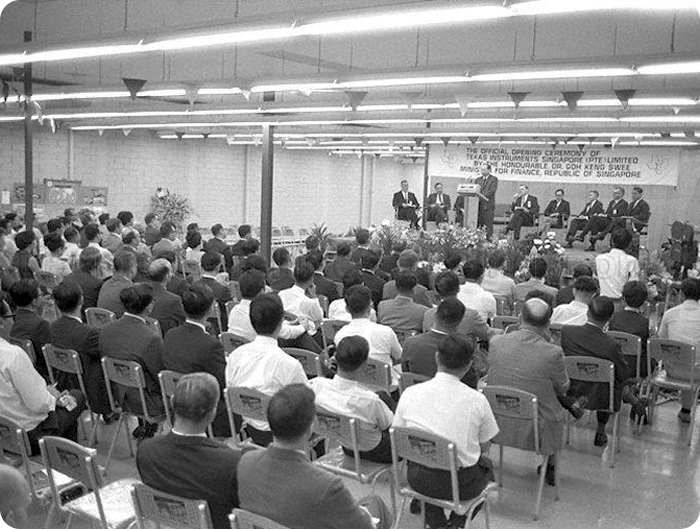
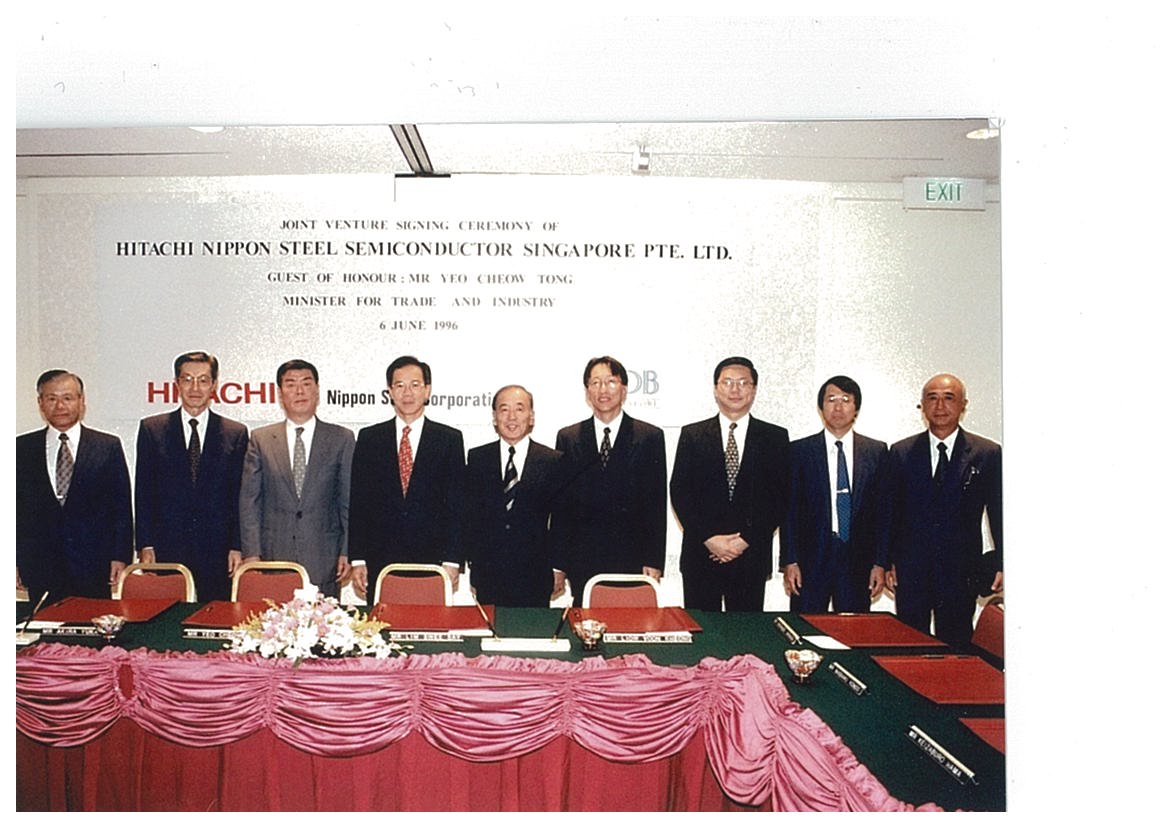
In 1968, National Semiconductor opened Singapore’s first semiconductor facility at River Valley Road.
Global pioneers including Texas Instruments, Fairchild, Siemens and the predecessors of STMicroelectronics follow, bringing investment, jobs and technical know-how.
THE SHIFT
Jobs → Skills → Manufacturing Capability
A new industry takes root, and a generation of Singaporeans begins building its capabilities.
1980s
From Assembling Chips to Making Them
Singapore moved into wafer fabrication, deepening precision manufacturing and technical capabilities.
In 1984, SGS Semiconductor opened Singapore’s first wafer fabrication plant in Ang Mo Kio, a predecessor operation of today’s STMicroelectronics.
By the late 1980s, Chartered Semiconductor Manufacturing emerged as a Singapore-based wafer foundry player, while successive global investments deepen the cluster.
THE SHIFT AND IMPACT
Assembly & Test → Wafer Fabrication → Engineering
Singapore moves up the semiconductor value chain.
1990–2000s
From Factories to an Ecosystem
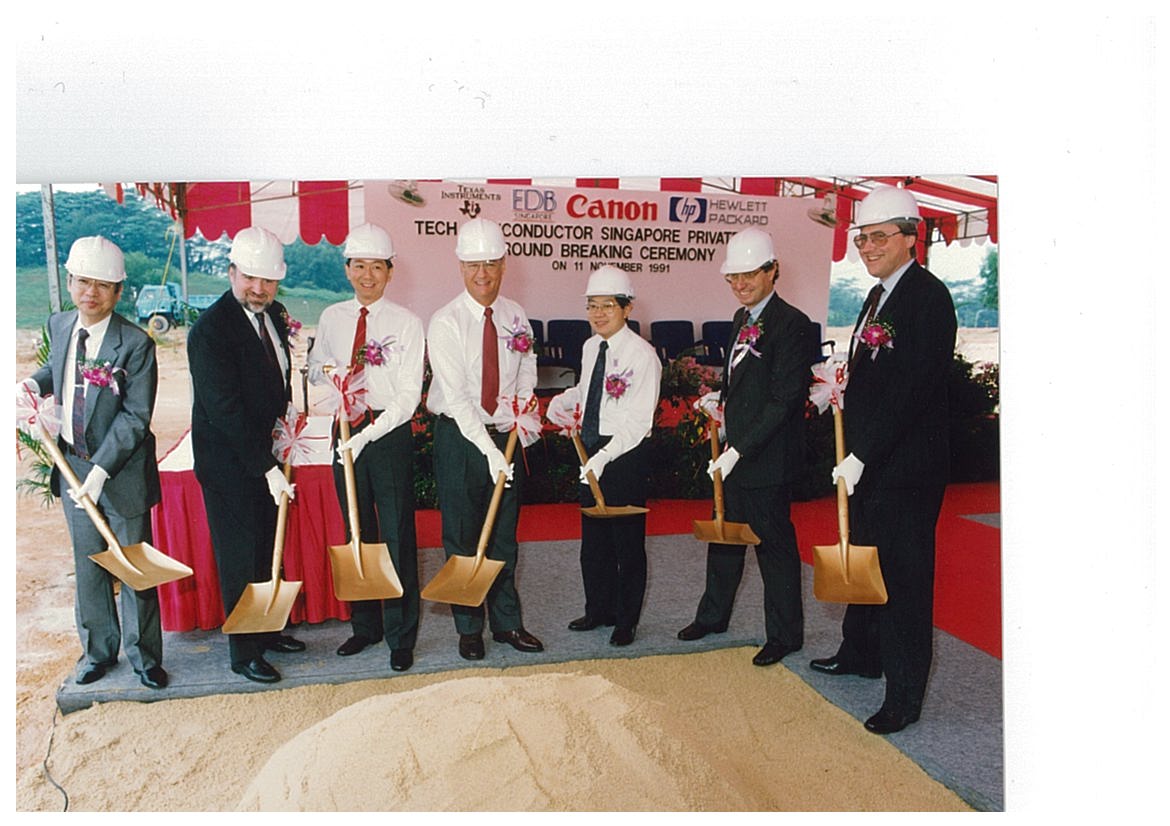
Dedicated Wafer Fab Parks were developed in Tampines, Pasir Ris and Woodlands, while capabilities expand across:
Materials • Equipment • Wafer Fab • Assembly & Test • R&D • Supply Chain
Global companies such as UMC, Micron, Siltronic, Soitec and Applied Materials established deeper manufacturing, engineering and regional operations here.
THE SHIFT AND IMPACT
Factories → Infrastructure → Full Ecosystem
Singapore becomes a globally connected semiconductor hub.
2010s
From Manufacturing Scale to Advanced Manufacturing
Automation, data and advanced process control reshaped the factory floor.
Singapore focused on productivity, engineering depth, quality and reliability.
Workforce training and reskilling expanded to equip engineers and technicians for increasingly automated and advanced manufacturing.
THE SHIFT AND IMPACT
Scale → Automation → Advanced Manufacturing
Singapore strengthens its position as a high-value manufacturing location.
2020s
From Manufacturing Hub to Innovation Node
A new wave of investment is strengthening Singapore across the semiconductor value chain, from advanced wafer fabrication and silicon wafers to memory and advanced packaging.
Singapore built capabilities for what comes next:
AI • Advanced Packaging • Photonics • Power Electronics • Smart Manufacturing
Since 2021, Singapore has seen major semiconductor investments and expansions by GlobalFoundries, Siltronic, UMC, Applied Materials, VSMC and Micron, strengthening capabilities across wafer fabrication, memory, advanced packaging, semiconductor equipment and materials.
Announced in 2025, RIE2030 identified semiconductors as its first RIE Flagship, with S$800 million subsequently committed to advance R&D in areas such as advanced packaging and photonics.
THE SHIFT AND IMPACT
Manufacture → Engineer → Innovate → Scale
Singapore shaping the technologies and capabilities of the next semiconductor era.
This website uses cookies to improve your experience. If you continue to use this site, you agree with it.